By Cedar Rapids Roofing · October 29, 2026
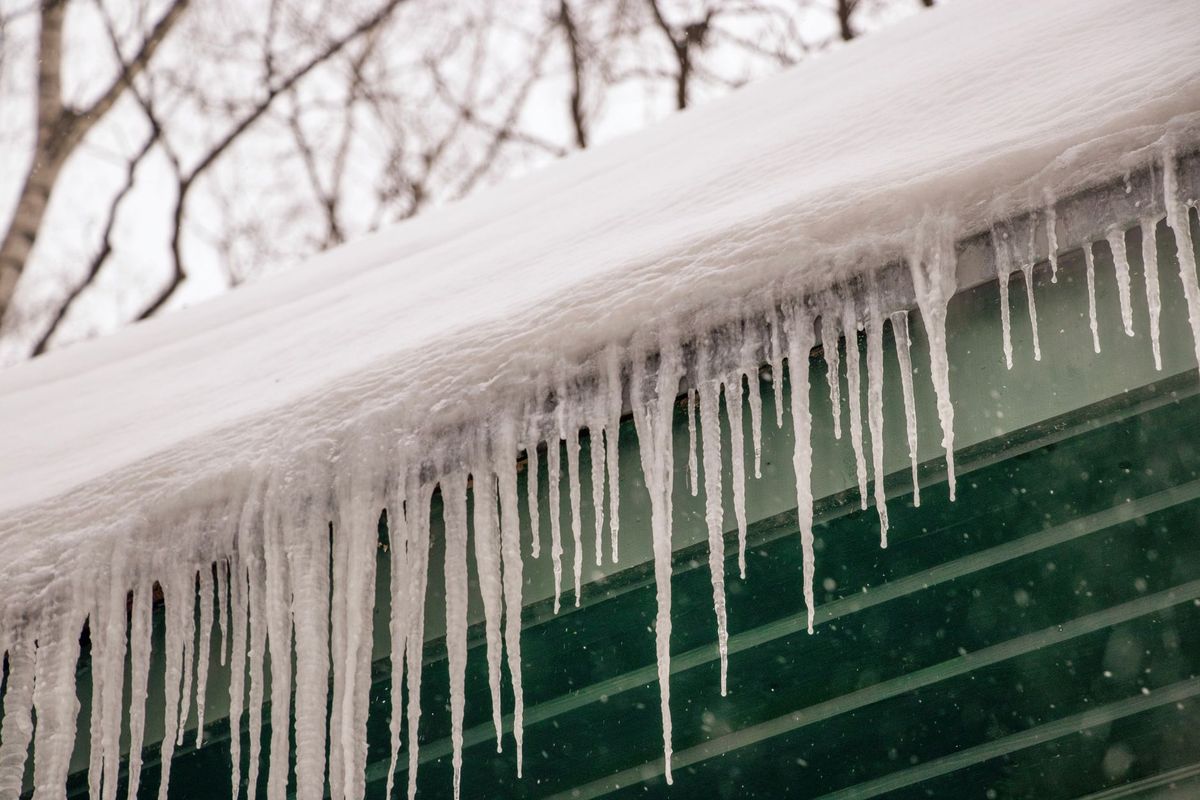
Icicles look nice along the roof edge, but they can be a sign of an ice dam, and ice dams can push water into your Cedar Rapids home. University of Minnesota Extension explains how they form and how to stop them. Fall, before the snow, is the time to deal with the cause.
An ice dam needs snow on the roof, with the upper part of the roof above 32°F while the lower edge is below 32°F. Snow melts up high, runs down and freezes at the cold edge. Water then backs up behind the ice and can find its way through cracks into the house. [UMN Extension]
That warm upper roof comes from heat escaping the house. UMN Extension says warm air leaking into the attic, for example through openings around ceiling light fixtures, is in many homes the major way heat gets there. Kitchen and bath exhausts that end just above the roof, chimneys, and leaky ducts in the attic add heat too. Recessed lights, skylights, complex roof designs and heating ducts in the attic all increase the risk. [UMN Extension]
UMN suggests hiring a weatherization contractor, who should run a blower door test to see how airtight your ceiling is and may use an infrared camera to find heat leaks. [UMN Extension]
Working on a snowy roof is risky, and UMN Extension says to contact professionals for roof work. [UMN Extension]
Get a free roof inspection quote from local Cedar Rapids roofers before winter.
Cedar Rapids Roofing is an editorial local guide with a daily blog for Cedar Rapids, with links to local pros and associates.
 CEDAR RAPIDS